
Not only is this episode, “From Dancing Mice to Psychopaths,” the season finale, it’s the finale to the penultimate season! BBC America announced that Season 5 would be the series’ last, and I’m glad for that. Don’t get me wrong – I love this show! – but there are times during Season 4 where c0-Brain Mike and I wondered if this series was going to start meandering without any sort of endgame in sight. And lo & behold, we have it! We know now that it’ll have: a really NASTY villain; a mysterious puppetmaster who’s possibly immortal (!); and probably a major death or three. Because let me tell you, Season 4 ends on a dark note.
But before that – hey look! Ferdinand’s back! A little poorer (OK, a lot poorer) but not dispirited, he reawakens Rachel’s lust for power via some S&M and bondage. (Somehow, this motivational trend hasn’t yet made the cover of Fast Company.) Now that Evil Cho is out of the way – permanently (death by maggot-bot!) – Rachel drops any pretense of working with Sarah and the rest of Clone Club. She wants Neolution, and she’ll betray anyone to get it. Speaking of betrayal…
Over on the Island of Lost Clones, Mommie Dearest Susan locks up Cosima after their attempt to create new Leda/Castor stem cells succeeds tremendously. For Susan, the search for the cure is important – but not as important as seizing power by restarting the cloning project. Like Rachel, Susan sees an opportunity to pull Neolution back onto the path of cloning supremacy. Unfortunately for Susan, she doesn’t have Rachel’s ruthlessness and self-hatred – and boy, is THAT a wild combo of bad traits! Spitting like Joaquin Phoenix in Gladiator, Rachel (a clone herself, mind you) tells Neolution’s board that the testing of clones will not only resume – she intends to push the White Rat metaphor to its nastiest extreme, stripping the new clones of all rights and keeping them locked up. OHHHH, SHE’S CRAZY.
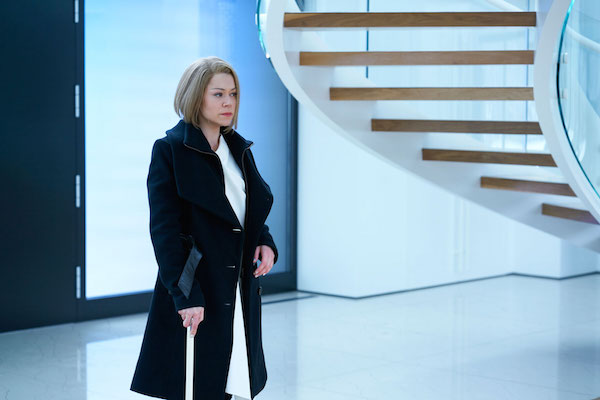
And yes, her bionic eye is still giving her David Lynch Vision – which leads to one of several references in this episode to Neolution’s founder, P.T. Westmoreland, who literally wrote the book (he did! He wrote a book!) on Neolution and genetic theory about 100 years ago. Susan had suggested that Westmoreland himself developed Rachel’s eye, but how could that be if the guy lived decades ago…?
In any event, Sarah and Mrs. S are in the dark about Rachel’s motives until a visit by clone beautician Krystal (and subsequent impersonation of Krystal by Sarah) gives them a chance to quiz new Brightborn big-wig Dr. Van Lier. They realize what Rachel and Susan are up to, and Sarah strong-arms Castor clone Ira into summoning a helicopter to take her to the Island of Lost Clones, where she intends to bring Cosima back, Die Hard style. Yeahhhhhh, about that….
Wednesday Charlotte gets an increasingly ill Cosima out of the locked room and says they have to get to the boat. First, though, they happen to see Rachel viciously stab Susan! Holy Matricide, Batman! Wednesday Charlotte is going to need therapy for that. They quickly leave the house, but a) they’re not sure where they’re going, b) it’s dark and really, really cold, and c) by leaving, they miss bumping into Sarah!
Sarah’s Bruce Willis impersonation lasts about as long as my brain cells during Live Free or Die Hard. She finds a badly injured but still alive Susan, and Rachel takes advantage of her distraction to beat the crap out of Sarah with her cane, stab her in the knee (!), and grab her gun. This would’ve been 30 seconds in a Die Hard film, but it’s understandably traumatic enough to send our hero Sarah scrambling for her life!
Sarah calls Mrs. S for help, but whoops, Ferdinand is already in the Rabbit Hole safe house, keeping an eye (and his gunsights) on both S and Kira. Rachel outmaneuvered Clone Club big time in this episode. The only tiny bright spot is the return of Delphine! Creepy Uncle Joe from Rachel’s visions shows up to save Cosima and Charlotte, and he brings them to — a homeless camp on the Island? With medical equipment? And ominous glances from other bearded people? Where is this, Mulholland Drive? Fortunately, Dr. Delphine brings Cosima back from the brink with her, um, bedside manner.
The season ends with Rachel, now firmly in power, about to have her first audience with … P.T. Westmoreland. Yes, he’s alive! Maybe. Could he be cloning himself over the decades and transferring his memories, ensuring his immortality? Or is a fakeout?
The Good:
It’s great to see Rachel as a villain again. Let’s give the writers credit for slowly building her back up over the course of two years. She’s now very much aware what defeat and humiliation taste like, which makes her deadlier than ever.
I’ve mentioned several times that I’m sick of the Castor clones, but I’ll make an exception if we can get a spinoff featuring Ira, Rachel, and Ferdinand. “Is he wearing socks?”
The Hendrixes hiding out in the woods with Grizzly Helena: Alas, Alison “has the shits.”
Krystal refuses to believe that she has any resemblance to Sarah. Brilliant.
I love it when a clone impersonates another clone. It somehow makes Tatiana Maslany even more amazing.
The Bad:
NOOOOOO, not another “Man Behind the Curtain” trope! Geez McGee, I thought we were done with that after Lost. I don’t mind the concept of an immortal mastermind, but this episode gives us the intro and the payoff in the same hour. No setup. It’s a little too Deathly Hallows-ish.
The WTF:
Why in the world does Sarah go solo to the Island of Lost Clones, when she already knows it’s a hostile situation? It’s crazy. She could’ve left Kira with Felix. There’s no reason for her NOT to have taken Mrs. S with her, since this is the type of situation that S excels in. That’s just, well, dumb.
Next:
That’s it for this year’s recaps, but stay tuned! Mike and I will soon mingle brain cells and discuss our final thoughts on Orphan Black Season 4.
–Ken




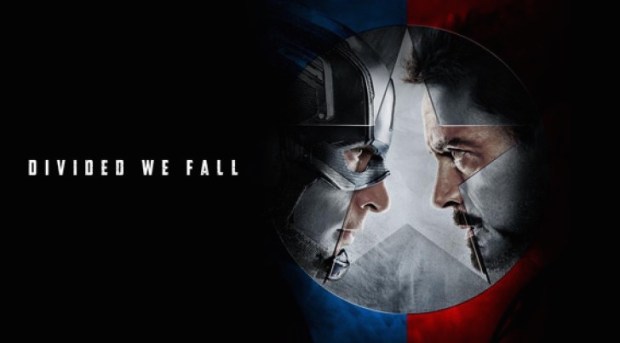

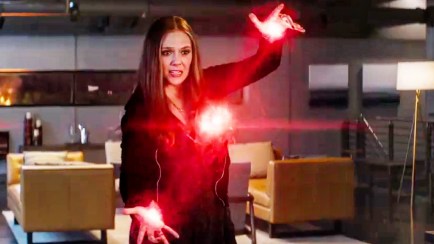

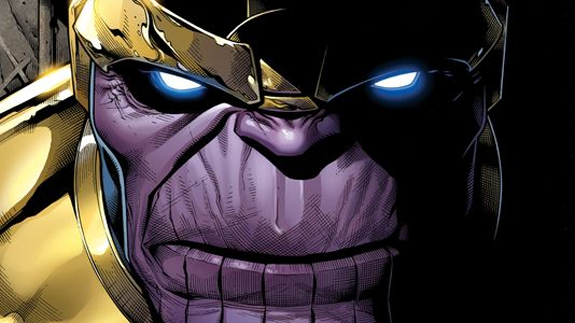

 Just as in The Avengers, she’s aware she can’t match the raw power of her teammates. So she goes to the spot where she knows that Cap and Bucky have to end up: the Quinjet. And she waits, like a spider in the web. Terrific.

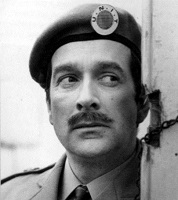
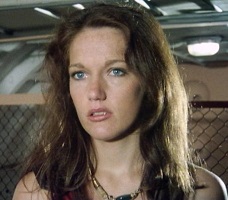 Don’t mess with the fierce warrior of the Sevateem and her skimpy leather hunting outfit. She certainly was unlike any previous Companion up to that point, having little compunction about killing enemies, although the Eliza Doolittle-Henry Higgins relationship between her and the Doctor created enough comedy to brighten up the dark spots. Her clash with Victorian England dining habits in the excellent “Talons of Weng-Chiang” is a moment of sheer joy. The fact that “Weng-Chiang,” like most of Leela’s stories, occurred during the great, dark, gothic Philip Hinchcliffe era didn’t hurt. Also, while Leela is best known for her savagery and fighting, she was surprisingly good at inspiring others to find bravery inside themselves.
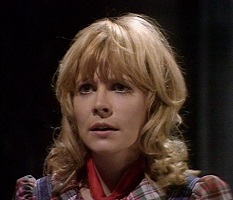 “One minute you’re condemning the Doctor to death, and the next minute you’re proposing to me!”
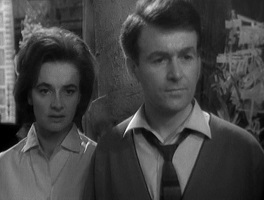 How can you separate these two? The schoolteachers introduced us to the Doctor in the series’ very first episode, “An Unearthly Child,” and they left together two years later. Not only did they give us, the viewers, a reference point in those early days, Ian and Barbara helped to “humanize” the Doctor, forcing him to confront his own stubborn beliefs and eventually compelling him to view the people around him as more than just pieces of history data. They also set the bar high for all the Companions to come. Barbara, in particular, was remarkably feisty for an early Sixties woman on TV, a credit to both Hill and producer Verity Lambert. Barbara’s argument with William Hartnell’s Doctor in “The Aztecs,” where she attempts to violate history and persuade the Aztecs to follow a more peaceful path over his near-panicked objections, remains a favorite Who moment. And for a skinny science teacher, Ian could kick ass.
 Speaking of kicking ass, there’s Ace. A juvenile delinquent with a knack for explosives, Ace was bold, reckless, completely devoted to “the Professor,” emotionally damaged, and fearless. She could shoot anti-tank missiles at Daleks and take on Cybermen with only a slingshot and a bag of gold coins — and she could fall to pieces if anybody dredged up memories of her mother. She was the culmination of then-producer John Nathan-Turner’s desire to feature “interesting” Companions, and while her backstory – such as it is – seems weak compared to what’s happening in the series now, Ace did blow up a path for these current Companions to follow.
 From the Impossible Girl’s first appearance in “Asylum of the Daleks,” Clara’s tenure aboard the TARDIS has certainly been anything but dull. Although the mystery surrounding her arrival often overshadowed her actual character at first – somewhat understandable, since she died twice in her first two appearances! – she began coming into her own during “The Name of the Doctor” … and by the time “The Day of the Doctor” rolled around, she was more than holding her own with three Doctors! It was with Peter Capaldi’s 12th Doctor, though, that Clara really found her voice, and could often take charge of a, well, impossible situation as well as the Doctor. Could she be bossy? Sure. Abrasive? Yes. But much like the Doctor himself, everything she did was in the name of finding adventure – and more importantly, helping others.
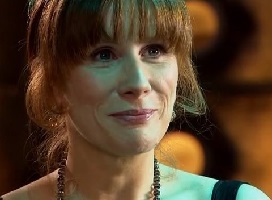 From her beginnings as a bad-tempered, about-to-be married ‘temp from Chiswick’, Donna Noble arguably had the most complete evolution as a Companion in the whole of the series. A departure from her predecessors, Donna had no romantic interest in the Doctor – she simply wanted adventure. And as she found adventure with the Time Lord, she managed to discover so, so many good things about herself as well. She also helped keep the Doctor grounded, such as in “The Fires of Pompeii,” when the Doctor horrifically realizes that HE is responsible for triggering Mount Vesuvius and killing thousands of people in ancient Pompeii. In that moment, she stands beside him and won’t let him face that decision alone.
 Romana’s second incarnation went from being a novice Time Lord who often was unsure about herself (and played wonderfully by the late Mary Tamm) to being one of the few Companions ever to stand on equal ground with the Doctor himself. Smart, funny, and extremely charismatic, Lalla Ward as Romana was a genuine joy to watch. At times, she was a powerful force to be reckoned with – watch her performance in the otherwise forgettable “Horns of Nimon,” it’s outstanding – and by the time Romana leaves the Doctor’s side in “Warriors’ Gate,” it’s quite clear that the character is more than ready to face the universe (or E-Space) on her own. (It also didn’t hurt that the evident off-screen chemistry between her and Tom Baker carried over to their televised stories, and brought a smile to every viewer’s face.)

 The Dalek emerges from the Thames (The Dalek Invasion of Earth, November 1964). The first time we saw the Daleks a year earlier, they were on a far-off world, oppressing their historical foes, the Thaals. Here, the TARDIS lands in 22nd century London to find it devastated and policed by ruthless, cybernetic “Robomen.” At the end of the first episode, they see a Dalek rolling imperiously out of the Thames River. The Daleks are on Earth, and they’ve already won.
 Oswin Oswald (Asylum of the Daleks, September 2012). Doctor Who fans had known for some time that Jenna-Louise Coleman would become the new companion for Matt Smith’s Doctor in the Christmas special that year, once Amy and Rory were gone. So, Whovians around the globe were shocked to watch the start of the new series’ seventh season and see… Jenna-Louise Coleman?! Acting all companion-like?! But how…? She’s not starting for months! How did showrunner Steven Moffat keep this a secret, and how… what, now she’s DEAD?! But how… MOFFAT!! Overall, just a brilliant bit of misdirection by Moffatt, and even though he dropped the ball on resolving the mystery of Clara Oswin Oswald several times during the season, there’s no doubt that he stuck the landing in the season finale, The Name of the Doctor.
 The Brains of Morbius